Olivier Boos, editor of i-visit-alsace.com
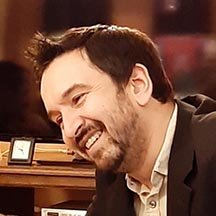
I’m Olivier Boos. I was born in Alsace, I grew up here, and I still live here — in Illkirch, just south of Strasbourg.
This site is mine. Not an agency, not a tourist board, not an outsourced content team. What follows is where I come from, what I genuinely know about this region, what I know less well, and why an Alsatian decided to write about Alsace in English.
On this page
- Growing up here
- What « living in Illkirch » actually means for the advice on this site
- The Bas-Rhin / Haut-Rhin honesty check
- Why I write in English
- What I can help with — and what I can’t
- Get in touch
Growing up here
My first years were spent in Schiltigheim, just north of Strasbourg, living with my grandparents. They spoke Alsatian to me, and I understand the dialect perfectly today — though I don’t speak it fluently anymore, for lack of practice. That’s a common story around here: my generation understands, the one before it speaks.
I then spent my childhood in Kilstett, a village on the Rhine plain northeast of Strasbourg. Nobody visits Kilstett. It has no half-timbered postcard square, no vineyard, no castle on a hill. It’s the Alsace that exists between the places tourists photograph, and I think growing up there has made me a bit allergic to the idea that this region is one long stretch of geraniums and storks.
A few years ago I moved to Illkirch, immediately south of Strasbourg, where I live now.
What « living in Illkirch » actually means for the advice on this site
Illkirch isn’t a tourist town. You don’t come here for half-timbering, although a handful of traditional houses survive. It’s a suburb with a tram line that drops you at Place de l’Homme de Fer in about twenty minutes.
That last detail matters more than it sounds. It’s exactly why I regularly point visitors here when they’re looking for somewhere to sleep in Strasbourg in December without paying Christmas-market prices for a room. Advice like that comes from living somewhere, not from researching it.
In practical terms, here’s my map of the region as I actually experience it:
Copier le tableau
| Destination | From my front door |
|---|---|
| Strasbourg city centre | 10 min by car (off-peak), 20 min by tram |
| Obernai / start of the Wine Route | 15 min |
| Colmar | 45 min |
| The Vosges (depending on the valley) | 30 min to 1 hour |
| Mulhouse | 1 h 15 |
I do my food shopping at the Saturday morning market in town. I take the A35 south when I’m heading to the vineyards. When friends visit from abroad, I’m the one driving them around and answering the same questions every time: where to park in Colmar in December, which village is survivable on an August Sunday, whether the train really works instead of a car.
That last conversation, repeated over and over for years, is the origin of this website.
The Bas-Rhin / Haut-Rhin honesty check
Here’s something most Alsace guides won’t tell you: nobody knows the whole region equally well. I certainly don’t.
I know the Bas-Rhin and the northern half of the Wine Route as a resident — Obernai, Barr, Molsheim, the Kochersberg, the castles above the Bruche valley, the Ried. These are places I’ve been going to since I was a child and still go to on ordinary Sundays.
I know the Haut-Rhin as a frequent visitor. Colmar, Riquewihr, Eguisheim, Kaysersberg, the Route des Crêtes — I’ve been many times, but I arrive by car and leave the same evening. On a free Sunday, the choice between a thirty-minute drive and two and a half hours round trip usually makes itself.
I’d rather say that than pretend to a uniform expertise nobody actually has. Where I’m writing as a resident, it shows. Where I’m writing as a well-informed visitor working from official sources and repeat trips, that shows too.
Why I write in English
I already run a French-language guide to Alsace, and an English version wasn’t part of the original plan.
It became the plan once I looked properly at what English-speaking visitors find when they search for this region. Broadly, two things: the same eight villages shot from the same angle, or long articles written by someone who passed through for two days in 2019. The practical layer — Sunday and Monday closures, seasonal opening dates, whether the bus actually runs in February, what a village feels like in May versus mid-December — is usually missing entirely.
And English-speaking visitors face harder logistics than French ones. You might land at Basel or Frankfurt rather than arriving down the A35. You might not be comfortable driving on the right. You might not have enough French to ring a domaine and ask whether the cellar is open on Tuesday. Those constraints genuinely change the advice, which is why this site isn’t a translation of my French one. Different structure, different itineraries, different assumptions about where you’re coming from.
There’s also a personal reason. Taking visiting friends around Alsace for years has taught me which explanations land and which don’t. Some things that are obvious to a French reader — how a winstub works, why half the region shuts on Monday, what « dégustation gratuite » does and doesn’t imply — need spelling out. That’s a large part of what I try to do here.
What I can help with — and what I can’t
Where I’m genuinely useful:
- Getting around without a car, and where that stops working
- Timing your visit — season, day of the week, time of day
- Which villages reward a full afternoon and which are a forty-minute stop
- Finding a base that isn’t ruinously expensive in December
- Reading a wine list, a menu, or a village in a way that isn’t obvious from outside
Where I’m not the right source:
- Luxury hotels I’ve never stayed in. I’ll tell you what’s documented and leave it there.
- Fine dining I haven’t paid for myself
- The deep Sundgau, in the far south — I know it far less well than the rest
When I haven’t seen something with my own eyes, the page says so. There’s a signed, dated « A local’s view » box on pages I’ve personally reviewed on the ground. If it isn’t there, that page is still documentary synthesis waiting for my visit — and I’d rather flag it than let you assume otherwise.
A small confession
When you’re Alsatian, you don’t photograph Alsatian monuments. They’re just there. You drive past them, you don’t think about them.
Building this site forced me to get the camera out in places I’ve been walking through for thirty years without ever stopping to actually look. That has turned out to be one of the better side effects of the whole project.
Get in touch
Questions, suggestions, corrections, or a partnership proposal — I read everything myself.
I usually reply within 48 to 72 hours. English or French, both are fine.
Corrections are the most valuable messages I receive. Please send them, even for tiny details — especially for tiny details, because those are the ones that ruin an afternoon.
Learn more about how this guide is written, funded and kept up to date